
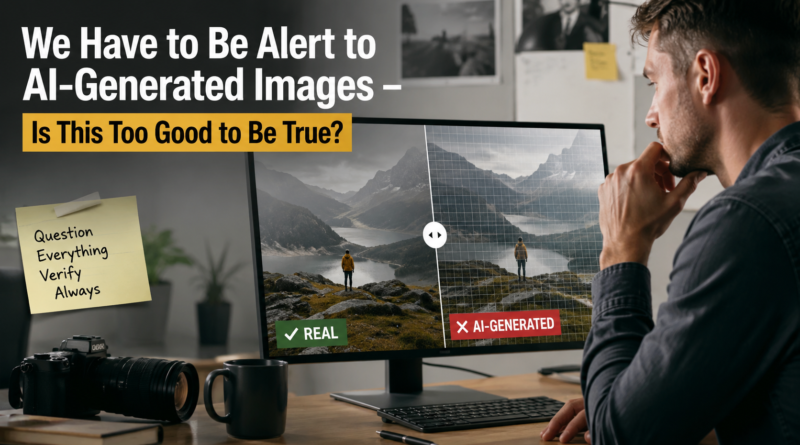
We Have to Be Alert to AI-Generated Images – Is This Too Good to Be True?
In today’s digital world, photography is no longer just about capturing reality—it is also about proving that reality actually happened. As artificial intelligence continues to evolve at an incredible pace, AI-generated images are becoming so realistic that even experienced photographers, editors, and news organizations sometimes need extra verification before trusting what they see.
This growing challenge is changing the future of photography, journalism, marketing, and digital content creation. Every day, millions of AI-generated images circulate across social media, websites, and online communities. Some are clearly labeled as AI art, while others are shared without any disclosure, making it increasingly difficult to separate authentic photographs from synthetic creations.
Recent discussions among leading photo editors have highlighted an important message: the future of photography depends on trust just as much as creativity. Major news organizations are strengthening their verification processes because image authenticity has become a critical part of responsible journalism.
The Rise of AI-Generated Photography
Modern AI image generators can produce portraits, landscapes, architecture, wildlife, and product photographs that appear almost indistinguishable from images captured by professional cameras.
Only a few years ago, AI-generated visuals contained obvious flaws—strange hands, unrealistic lighting, distorted faces, and inconsistent backgrounds. Today’s AI models have dramatically improved. Better training data, advanced diffusion models, and sophisticated editing capabilities have created visuals that often fool casual viewers.
For businesses, this technology offers faster content creation and lower production costs. Marketing agencies can generate campaign visuals in minutes, while designers can quickly create concept art without organizing expensive photoshoots.
However, convenience comes with a serious question:
If anyone can create a realistic image in seconds, how do we know what is real?
Why Authentic Photography Still Matters
Photography has always served as visual evidence.
Whether documenting world events, wildlife conservation, historical moments, sports competitions, or everyday life, photographs help preserve reality.
When manipulated or AI-generated images are presented as genuine photographs, they can:
- Spread misinformation
- Damage public trust
- Influence public opinion
- Create fake evidence
- Harm reputations
- Confuse consumers
This is why professional photographers continue to play an irreplaceable role.
A skilled photographer does more than press the shutter button. They understand timing, composition, lighting, emotion, ethics, and storytelling. Most importantly, they document moments that actually occurred.
The New Challenge for Photojournalism
News organizations now invest significant time verifying photographs before publication.
Editors examine:
- Original RAW files
- Camera metadata (EXIF)
- Image timestamps
- GPS information
- Multiple eyewitness photographs
- Photographer credentials
- Editing history
These verification steps help ensure published images accurately represent real events rather than AI-generated fabrications. As highlighted by photography editors, trust, ethical standards, and rigorous verification have become essential parts of modern visual journalism.
Can People Still Recognize AI Images?
Unfortunately, identifying AI-generated images is becoming increasingly difficult.
Earlier AI images often showed:
- Extra fingers
- Blurry text
- Impossible reflections
- Unrealistic shadows
- Strange facial symmetry
Today’s AI systems fix many of these issues automatically.
Instead of relying solely on visual clues, experts increasingly recommend evaluating the source of an image, checking contextual evidence, and looking for supporting documentation before assuming authenticity.
In many situations, image verification is becoming more reliable than visual inspection alone.
Social Media Makes the Problem Bigger
Social media platforms reward speed.
Images that trigger strong emotions are shared within minutes, often reaching millions of viewers before anyone verifies whether they are genuine.
AI-generated disaster scenes, celebrity photographs, political events, and fabricated news images have already demonstrated how quickly misinformation can spread online.
Once an image goes viral, correcting the misinformation becomes much harder than preventing it in the first place.
The Importance of Ethical Editing
Photo editing has always been part of professional photography.
Adjustments such as:
- Color correction
- Exposure balancing
- Background cleanup
- Dust removal
- Cropping
- Noise reduction
are accepted practices when they preserve the integrity of the original photograph.
Ethical photo editing improves image quality without changing the truth of the scene.
This distinction is becoming increasingly important as AI-powered editing tools become more sophisticated.
AI Is Not the Enemy
Artificial intelligence is not inherently harmful.
In fact, photographers already use AI for:
- Noise reduction
- Subject selection
- Automatic masking
- Background enhancement
- Image upscaling
- Faster culling
- Smart object removal
These tools improve productivity while allowing photographers to focus on creativity.
The concern arises only when AI-generated images are presented as authentic photographs without transparency.
Responsible use—not rejection—of AI will shape the future of the photography industry.
Why Professional Photo Editing Is More Valuable Than Ever
As authentic photography becomes increasingly important, professional photo editing services also gain value.
Businesses, ecommerce brands, advertising agencies, photographers, and publishers still require real photographs that are carefully edited while maintaining visual accuracy.
Professional editors understand color consistency, realistic retouching, product accuracy, and brand standards—qualities that automated AI tools often struggle to deliver consistently.
When customers view product images online, they expect photographs that honestly represent what they will receive. Maintaining this trust is essential for long-term brand credibility.
For companies looking to improve authentic photographs while preserving realism, professional editing remains the safest and most reliable solution.
Learn more about professional image enhancement and editing services here:
https://www.oursglobal.com/outsource-photo-editing-services
Looking Ahead
Artificial intelligence will continue transforming photography.
Some workflows will become faster.
Creative possibilities will expand.
Image production costs may decrease.
Yet one thing is unlikely to change: people will always value authenticity.
The most powerful photographs are not simply visually impressive—they tell true stories, preserve genuine moments, and connect people through reality.
As AI-generated imagery becomes increasingly convincing, photographers, editors, publishers, and audiences must become more thoughtful about verifying what they see. The future of photography will not depend solely on better cameras or smarter algorithms—it will depend on maintaining trust in the images that shape our understanding of the world.