
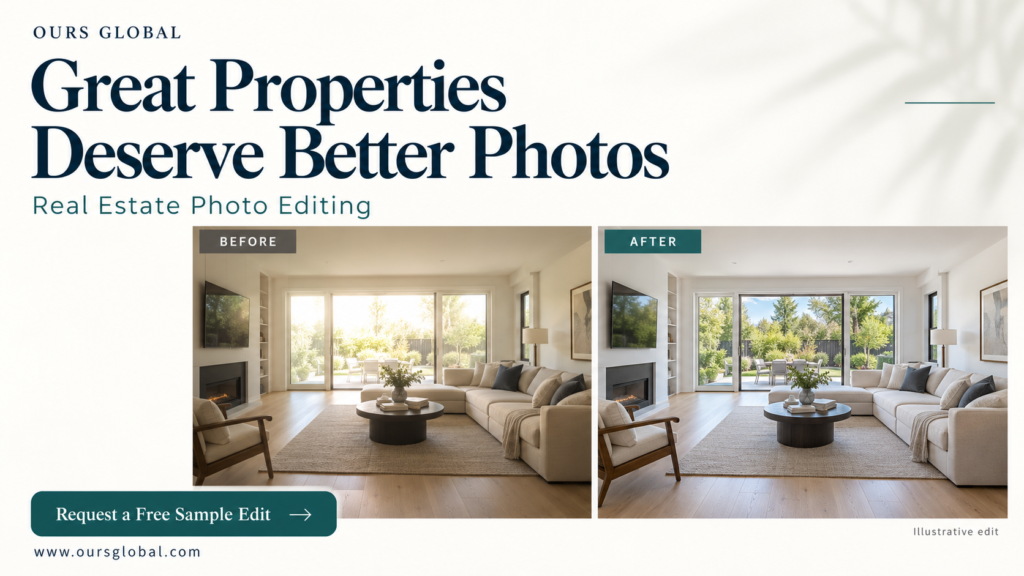
Real Estate Photo Editing: Help Buyers See the Value in Every Listing
A property can feel bright, spacious, and welcoming in person while looking flat and uninviting online. The living room appears darker than it really is. The windows turn into white rectangles. Walls lean toward the edge of the frame. Different photographs make the same paint color look yellow, gray, or blue.
These are presentation problems, and they deserve attention before the listing goes live.
For real estate agents, photographers, developers, and property managers, professional photo editing helps bridge the gap between what the camera records and what a visitor experiences. It gives potential buyers a clearer way to understand the space and gives your team a more consistent set of marketing assets.
Better photographs cannot fix an unrealistic asking price or guarantee a sale. They can help prevent poor presentation from becoming an avoidable reason to overlook a suitable property.
What Are Real Estate Photo Editing Services?
Real estate photo editing services improve the exposure, color, alignment, and overall presentation of property photographs. The aim is to produce clear, natural images that communicate the property’s actual features.
A useful way to judge an edit is to ask whether it makes the photograph easier to understand. Can you see the finishes? Does the room feel believable? Do the walls look straight? Does the image match the rest of the listing?
The strongest results rarely draw attention to the editing itself. They help the viewer focus on the home.
Start with the Buyer’s Questions
Before choosing editing effects, consider what someone needs to learn from your photographs. A buyer may want to know whether a living area can accommodate family seating, whether a kitchen has usable work surfaces, or how the dining space connects to the rest of the home.
Your image set should answer those questions in a sensible order. Lead with a representative photograph that introduces the property, then move through the spaces that explain its layout and appeal. Detail shots can support the story, but they should not replace clear room views.
Editing supports this approach by making important features visible. A balanced kitchen image lets the viewer examine cabinetry and surfaces. A clear living room photograph helps communicate furniture placement. Consistent colors make it easier to recognize the same space from different angles.
The objective is to help people decide whether the property deserves a closer look.
Make Brightness Believable
Bright windows and darker interiors are a familiar challenge in property photography. A single exposure may capture the room well while losing detail outside, or preserve the view while leaving the interior too dark.
HDR blending combines photographs taken at different exposures to balance those areas. Capturing the same composition on a tripod helps provide aligned source images for this process. Adobe’s real estate photography guide describes this capture-and-blend approach for handling indoor lighting differences.
However, brightening every surface equally is not the goal. Rooms still need natural shadows and a believable relationship between the light source and surrounding areas. An interior that looks completely flat may communicate less depth than a carefully balanced image.
Judge the result by the room’s readability, not by how dramatically it differs from the original.
Build a Consistent Gallery, Not Just One Strong Cover Image
The first photograph matters, but the rest of the gallery needs to support it. An appealing exterior followed by uneven interior images can make the presentation feel unfinished.
Review photographs as a set. If the kitchen looks cool and neutral in one frame but strongly orange in the next, ask for a closer match. If one bedroom is unusually bright, compare it with the other rooms before approving the batch.
Consistency does not mean making every room identical. A shaded bedroom and a sunlit lounge should retain their different lighting conditions. The goal is a coherent editing style that preserves those differences without introducing distracting changes.
For agencies working with several photographers, a small reference gallery can be especially useful. It gives everyone a shared standard for brightness, color, contrast, and finishing.
Preserve the Details That Build Trust
Property photographs help set expectations for a viewing. Attractive images are useful only when they remain a fair representation of the space.
Ask editors to preserve room proportions, permanent features, and the property’s actual condition. Avoid stretching spaces, concealing damage, or introducing views that are not present. If furniture is digitally added, identify the image as virtually staged and retain an original version for comparison.
This is also a practical quality check. Compare the edited image with the source before publishing. Look at doors, window frames, cabinetry, flooring patterns, and fixed fittings. Small distortions can be easy to miss when you focus only on brightness.
A good brief makes these boundaries clear from the start. It helps the editor understand both the visual style you want and the details that must remain unchanged.
Where Professional Editing Fits Your Business
Real estate agents and brokerages
For agents, image production needs to fit the listing schedule. A clear handoff between photography, editing, approval, and publication can make launch preparation easier to manage.
Create one approval standard that your team can use across listings. This reduces repeated explanations and helps maintain a recognizable level of presentation, whether you are marketing a compact apartment or a larger family home.
Real estate photographers
For photographers, editing competes with shooting, travel, client communication, and business development. Outsourcing may be useful when post-production regularly extends into evenings or limits the number of assignments you can comfortably accept.
The right partner should be able to interpret your references and respond to specific feedback. Your editing style remains part of your service, so evaluate whether an outside team can reproduce it across an entire shoot.
Developers and property managers
Larger portfolios create a different challenge: keeping assets organized while maintaining quality across many units, properties, or project phases.
Agree on property identifiers, file naming, approval responsibilities, and delivery folders before volume increases. A well-edited photograph loses practical value if the marketing team cannot confidently identify where it belongs.
For rental properties, prioritize clear views of the spaces and amenities guests will actually use. Presentation should support accurate expectations about the stay.
When Does Outsourcing Make Sense?
Outsourcing is worth considering when editing becomes a recurring obstacle to delivery, growth, or consistent quality. It is less useful if the handoff creates more work than it removes.
Start by measuring your existing process. Record the time spent editing, checking files, requesting corrections, and preparing final exports. Include the time spent switching between those tasks and other responsibilities.
For example, if a 40-image shoot takes an average of three minutes per image to edit, the editing alone represents two hours of work. This is an illustrative calculation, not an industry benchmark. Your own figures will show whether outsourcing could free meaningful capacity.
Next, test the handoff. Send a representative batch with a clear brief and assess the total time required to review it. A useful partner reduces the overall workload while preserving the standard your clients expect.
Compare Editing Quotes on the Same Basis
A low starting price is helpful, but it does not explain the full scope of a project. Before comparing providers, make sure each quote covers the same work.
Ask which corrections are included, which changes are billed separately, and what counts as a finished image. Confirm whether multiple exposures merged into one photograph are priced by the source files or the final output. Discuss revision limits and any charges for urgent delivery.
Then consider the cost of your own review time. A slightly higher quote may be better value if it produces a usable batch with fewer corrections. Equally, a basic service may be sufficient when your source images need only straightforward adjustments.
Choose the level of editing the property needs. Spending more on every photograph is not automatically a better marketing decision.
Use a Sample Edit to Make a Better Decision
A sample is most useful when it resembles your everyday workload. An unusually easy photograph may look impressive without showing how the editor handles the problems you regularly encounter.
Choose an image with a relevant challenge, such as mixed lighting or a bright window beside darker furniture. Provide a reference that shows your preferred finish and explain any details that must be preserved.
When the sample arrives, assess more than the immediate visual impact. Look for accurate colors, clean edges, natural textures, and believable lighting. Check whether the editor followed your instructions and whether the delivered file is suitable for its intended use.
If the sample is promising, move to a small complete shoot. This reveals consistency between images and gives you a better basis for discussing ongoing work.
Send a Brief That Reduces Revisions
Clear instructions give the editor fewer decisions to guess. A practical brief should include:
- The property or project identifier and the intended use of the images.
- Original files, with related exposures grouped clearly.
- A small selection of approved reference images.
- Your preferences for brightness, color, contrast, and window detail.
- Specific requested changes and features that must remain untouched.
- Required dimensions, formats, naming conventions, and delivery deadline.
- One contact responsible for gathering and approving feedback.
Describe feedback in terms the editor can act on. “Keep the timber warmer while neutralizing the white ceiling” is more useful than “make it premium.” If you request a style change, explain whether it applies to one photograph or the entire batch.
Once a workflow is established, keep the approved brief as a reference for future projects. Update it when your needs change instead of relying on separate instructions scattered across messages.
Review the Result as a Marketing Asset
Technical quality is one part of approval. The image also needs to work where people will see it.
Preview the selected cover photograph at a small size and on a phone. Check whether the property remains easy to recognize and whether important features survive the crop. Review the complete gallery in its intended order so similar frames do not unnecessarily repeat the same information.
Keep a high-quality master set and prepare separate copies for the channels you use. A website, printed brochure, and social post may require different crops or exports. Confirm each destination’s current specifications before uploading.
Finally, track useful outcomes. Enquiries, viewing requests, and feedback can help you assess the presentation, but interpret them alongside changes in price, promotion, and market conditions. More image views alone do not establish that editing caused more sales.
Frequently Asked Questions
Can photo editing help attract more property enquiries?
It can help by making the property’s features clearer and its presentation more appealing. However, enquiries also depend on location, price, demand, distribution, and listing information. Treat editing as one part of the marketing process rather than a guaranteed lead source.
Can every dark or blurry photograph be fixed?
No. The available detail in the original files limits what an editor can achieve. Severe blur, missing highlights, and very noisy shadows may require a reshoot. Send representative originals for assessment before committing to a large batch.
Should every image receive advanced editing?
No. Start with the purpose of the photograph and the quality of the source. Many images need only a consistent basic finish. Reserve more involved work for images where it adds a clear and appropriate benefit.
How do you keep an outsourced editor aligned with your style?
Use approved examples, a short written brief, and consolidated feedback. Evaluate a complete batch before expanding the workload. Keep track of agreed changes so the same corrections do not need to be explained repeatedly.
What should you confirm before an ongoing arrangement?
Agree on scope, pricing, delivery times, revision handling, file access, and the approval process. Begin with a manageable volume and expand once the workflow produces consistent results for both teams.
Give Your Next Listing a Stronger First Impression with OURS GLOBAL
Your photographs should help people understand a property’s appeal. If dark interiors, inconsistent colors, or a growing editing backlog are holding your marketing back, OURS GLOBAL can help.
Our real estate photo editing services include HDR blending, exposure and color correction, perspective correction, window enhancement, sky replacement, virtual staging, and other property image improvements. We support real estate photographers, agencies, developers, and property businesses worldwide.
Editing starts from $0.50 per image, with a 24-hour turnaround advertised on our service page. Final pricing and delivery should be confirmed for your image volume, editing requirements, and project scope.
Start with a free sample edit to evaluate the finish. Share a representative image, your preferred style, and your deadline, then discuss a workflow that fits your business.
Ready to improve your next property listing? Request a free sample or a tailored quote from OURS GLOBAL, or email sales@oursglobal.com.