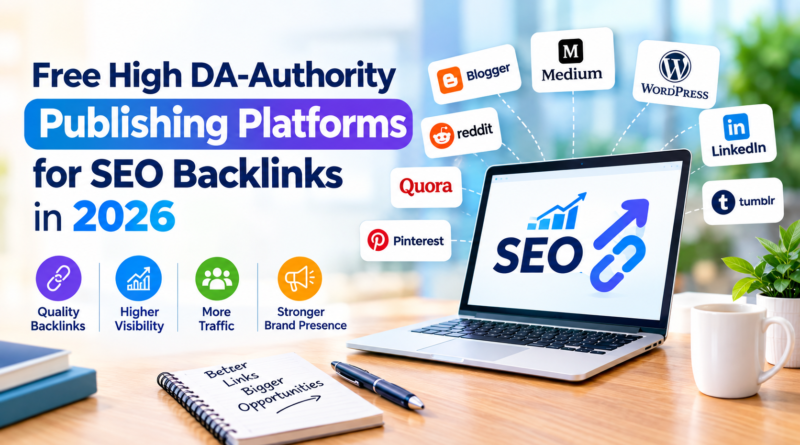
Free High DA-Authority Publishing Platforms for SEO Backlinks in 2026
Introduction
Building a strong online presence requires more than publishing content on your own website. Businesses can also share useful articles, industry insights, and educational resources on relevant third-party publishing platforms. These platforms can help companies increase brand awareness, reach new audiences, and generate referral traffic.
For businesses working on SEO, free article publishing websites and Web 2.0 platforms are often considered part of an off-page marketing strategy. However, each platform has its own content guidelines, moderation process, and backlink policies. Domain Authority (DA) is a third-party SEO metric and does not guarantee Google ranking improvements or link equity.
This guide introduces 25 publishing and content-sharing platforms that businesses can explore in 2026. Before publishing, check the platform’s current rules and whether external links are allowed.
25 Free Publishing Platforms to Explore
1. Blogger
Blogger is a free blogging platform that allows users to create and publish articles on different subjects. Businesses can use a dedicated blog to share industry knowledge, service explanations, and educational content.
Website: https://www.blogger.com/
2. Medium
Medium is a publishing platform for long-form articles, professional insights, and educational content. Businesses can share original articles to reach readers interested in their industry.
Website: https://medium.com/
3. WordPress.com
WordPress.com allows users to create hosted blogs and publish informative content. It can be used to build a consistent content presence around a business niche.
Website: https://wordpress.com/
4. Tumblr
Tumblr combines blogging and social publishing. Businesses can share short articles, images, and relevant resources while connecting with communities interested in their topics.
Website: https://www.tumblr.com/
5. LinkedIn
LinkedIn is a professional networking platform where businesses and individuals can share articles, industry insights, and company expertise.
Website: https://www.linkedin.com/
6. DEV Community
DEV Community is focused on software development and technology discussions. Technology businesses can contribute useful technical content where it fits the community guidelines.
Website: https://dev.to/
7. Hashnode
Hashnode is a developer-focused publishing platform. It is suitable for technical tutorials, software engineering insights, and development-related articles.
Website: https://hashnode.com/
8. HackerNoon
HackerNoon publishes technology and innovation-related content. Contributors should follow its editorial guidelines and submission requirements.
Website: https://hackernoon.com/
9. Quora
Quora is a question-and-answer platform where users can provide informative responses. Businesses can share expertise without inserting irrelevant promotional links.
Website: https://www.quora.com/
10. Reddit
Reddit contains topic-specific communities where users discuss industry subjects and share resources. Participation should follow each community’s rules, including self-promotion policies.
Website: https://www.reddit.com/
11. Substack
Substack enables writers and businesses to publish newsletters and articles. It can support long-term content distribution and audience building.
Website: https://substack.com/
12. Ghost
Ghost is a publishing platform for blogs and newsletters. Businesses can use it to develop an independent content channel.
Website: https://ghost.org/
13. HubPages
HubPages is a content publishing platform where contributors can explore educational and informational topics. Review current contributor requirements before submitting.
Website: https://hubpages.com/
14. Vocal Media
Vocal Media allows creators to publish written content and stories. It may be useful for businesses exploring additional content distribution channels.
Website: https://vocal.media/
15. LiveJournal
LiveJournal is a blogging and community platform. Writers can publish relevant content and participate in discussions where appropriate.
Website: https://www.livejournal.com/
16. Wattpad
Wattpad is primarily focused on storytelling and written works. It is more suitable for creative content than conventional business backlink campaigns.
Website: https://www.wattpad.com/
17. Pinterest
Pinterest is a visual discovery platform. Businesses can share useful graphics, infographics, and visual resources that link to relevant website content where permitted.
Website: https://www.pinterest.com/
18. Flipboard
Flipboard is a content discovery and reading platform. Businesses can explore its current publishing and content-sharing options.
Website: https://flipboard.com/
19. Issuu
Issuu is a digital publishing and document-sharing platform. Businesses can use it for brochures, magazines, and informative publications, subject to current account and link restrictions.
Website: https://issuu.com/
20. SlideShare
SlideShare is used for sharing presentations and professional documents. Businesses can turn educational articles into presentations to expand content reach.
Website: https://www.slideshare.net/
21. Google Sites
Google Sites allows users to create websites and information pages. It can be used for legitimate supporting resources, provided the content is useful and not created solely to manipulate search rankings.
Website: https://sites.google.com/
22. Notion
Notion supports document creation and public page sharing. Businesses can use publicly shared resources for educational content and documentation when appropriate.
Website: https://www.notion.so/
23. Jimdo
Jimdo provides website-building tools for individuals and businesses. It may be explored for creating an independent online presence.
Website: https://www.jimdo.com/
24. Telegra.ph
Telegra.ph is a simple publishing platform for creating articles. Check its current availability, publishing rules, and external-link policies before using it for business content.
Website: https://telegra.ph/
25. JustPaste.it
JustPaste.it allows users to publish and share text content. Businesses should check the platform’s current moderation and link policies before posting promotional material.
Website: https://justpaste.it/
How to Use Publishing Platforms for SEO
Publishing articles on external platforms should be part of a broader content marketing strategy. Instead of copying the same article across 25 websites, create original content that answers a specific question or solves a relevant problem.
For example, a digital marketing company can publish articles about:
- How businesses can improve their online visibility.
- Why technical SEO matters for growing websites.
- How content marketing supports customer acquisition.
- Common mistakes in managing business websites.
- How outsourcing digital marketing can support internal teams.
When including a backlink, use descriptive anchor text that matches the article’s context. Avoid excessive keyword repetition or placing links where they do not help readers.
Dofollow backlink note: High domain authority does not guarantee a dofollow link. Link attributes, moderation, and eligibility vary by platform. Verify the actual published HTML and current policy instead of relying on third-party lists that promise guaranteed dofollow links.
Why Professional Digital Marketing Services Matter
Publishing content is only one part of a complete digital marketing strategy. Businesses also need search intent research, technical SEO, content planning, conversion optimization, and performance monitoring.
Professional digital marketing support can help organizations develop a structured online marketing approach based on their business goals, target audience, and website requirements.
If your business needs support with SEO, content marketing, social media marketing, or other online marketing activities, explore the services offered by OURS GLOBAL.
Explore OURS GLOBAL Digital Marketing Services:
https://www.oursglobal.com/outsource-digital-marketing-services
Conclusion
Free publishing platforms can support content distribution, brand visibility, and referral traffic when used responsibly. The most useful approach is to select platforms relevant to your industry, publish original information, and follow each website’s policies.
Rather than focusing only on domain authority or instant approval, businesses should build a balanced digital marketing strategy that combines valuable content, relevant partnerships, and sustainable SEO practices.